Eat the Frog: How to Do Your Hardest Task First
How the eat the frog technique works: where it comes from, how to pick the right task, a night-before routine, and what to do when the frog is too big.

Eat the frog is a prioritisation technique: each day you pick the one task that matters most and that you are most likely to avoid, and you do it first, before email, messages or smaller jobs. Once it is done, nothing else in the day can push it aside. The rule takes a minute to learn. The real work is choosing the right frog and keeping the habit on days when something else feels more urgent.
Where does “eat the frog” come from?
Most people met the phrase through Brian Tracy’s 2001 book Eat That Frog, which turned it into a method for beating procrastination. Tracy built the book around a line usually credited to Mark Twain: if your job is to eat a live frog, do it first thing in the morning, and if you have to eat two, start with the bigger one.
Whether Twain ever said it is doubtful. Quote researchers have not found it in his writing, and similar sayings about swallowing a live toad in the morning appear in French writing from well before his time. The frog is the task you would rather not face. Facing it first means the worst part of the day is behind you by mid-morning.
How do you choose the right frog?
Most people pick the biggest task on the list. Size is a poor guide. A frog is the task with the most consequence that you are also most likely to postpone, and it takes both of those to make a frog. A long task you enjoy is not a frog. A small, unpleasant one that blocks other work often is.
Three questions narrow it down. If you finish only one thing today, which one changes the most? Which task have you already moved to tomorrow more than once? Which one would bring real relief once it is done? The task that comes up in two or three answers is your frog.
For a student, the frog is rarely “study”. It is the past paper for the topic you keep skipping. For a developer, it is the bug nobody can reproduce, not the three small tickets that will each take twenty minutes. For someone writing a report, it is the section with the numbers that might not add up. The common thread is discomfort: a frog usually involves uncertainty, a hard conversation, or the risk of finding out the work is worse than you hoped.
Pick one. Two frogs a day sounds ambitious and usually means neither gets eaten first.
How to plan your frog the night before
Deciding on the frog in the morning invites negotiation. You open your laptop, see a message that looks urgent, and the frog quietly slides to the afternoon. Choosing it the evening before removes that moment of choice.
There is research behind this. Peter Gollwitzer’s work on implementation intentions, reviewed in a 1999 paper, found that people who decide in advance when and where they will act tend to follow through more often than people who only set a goal. “At 9:00, at my desk, I open the budget sheet” works better than “I’ll do the budget tomorrow”.
The routine takes about five minutes:
- Look at tomorrow’s calendar and find your first free block of at least 45 minutes.
- Name the frog in one line, written as an action: “draft the methods section”, not “thesis”.
- Write its first step, small enough to start in ten minutes without thinking.
- Set up what that step needs: the file open, the notes on the desk, the past paper printed.
- Write down two or three smaller tasks for later in the day, so they stop circling in your head.
In the morning you do not decide anything. You sit down and do the first step.
What if the frog is too big to finish in one go?
Some frogs are really projects: a thesis chapter, a database migration, a tax return with missing receipts. Trying to eat one whole is how people end up avoiding it for weeks. Tracy’s book suggests slicing a big task into smaller pieces.
Break the frog into steps that each end with something you can see. “Work on the proposal” has no finish line. “Write three headlines”, “fill in the budget table” and “send it to Sam” each do. Make the first step almost embarrassingly small, because its only job is to get you moving.
This is the part of the method we built Rana around: you can slice a frog into up to ten small steps and tick them off as you go, and the first one only needs ten minutes.
When a frog is that big, today’s frog becomes the next step, not the whole project. Over a week, five eaten steps move a project further than five days of meaning to start.
Should you pair eat the frog with a timer?
Eat the frog tells you what to do first. It says nothing about how to stay with it, and that is where many mornings fall apart: ten minutes in, the frog gets hard and your phone looks interesting.
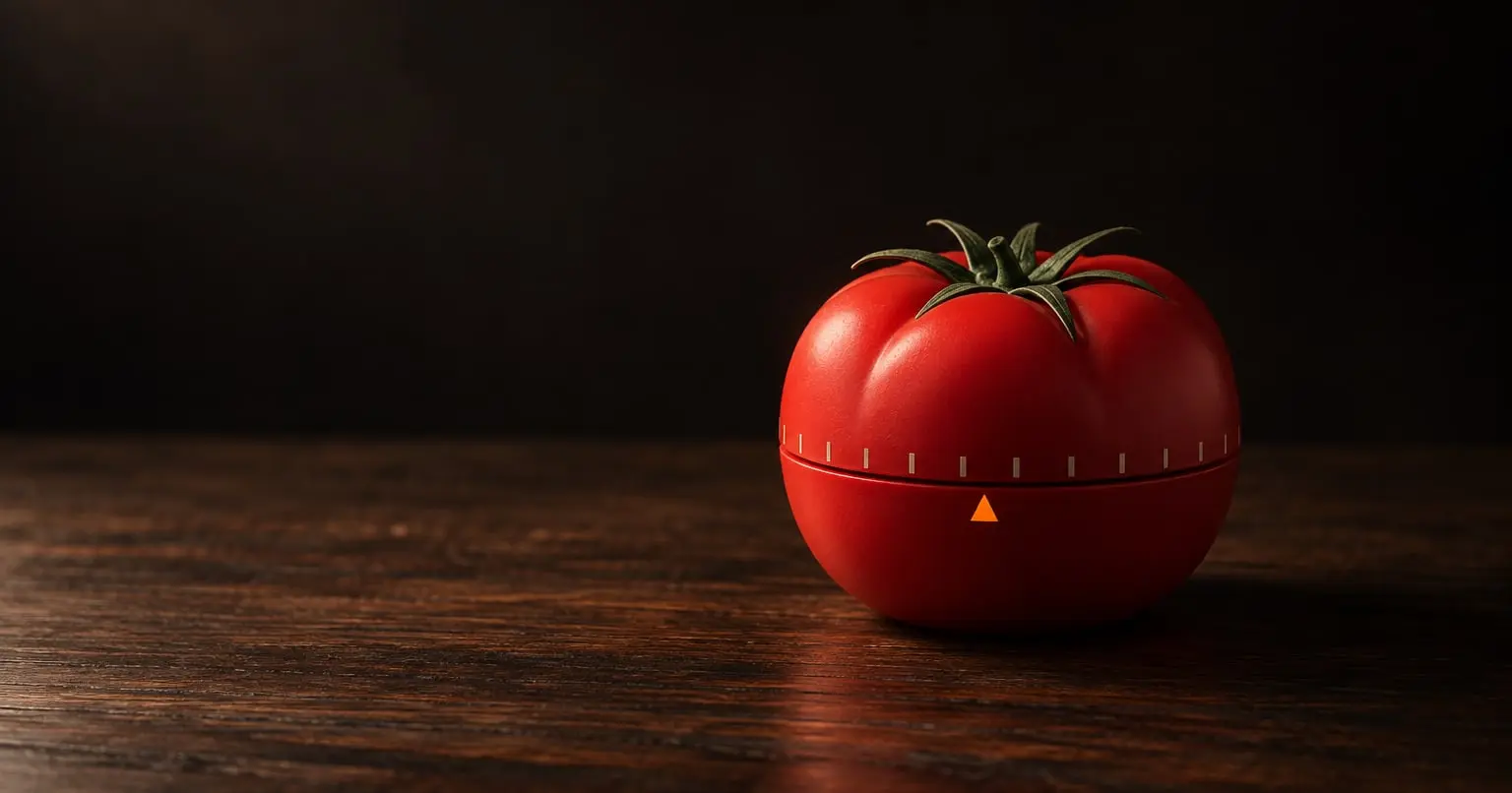
A timed block helps. The Pomodoro method fits well here: set a timer for a fixed stretch of focus, often 25 minutes, work only on the frog until it rings, then take a short break. The timer makes the commitment finite. You are not promising to finish the frog, only to give it one block of attention. For a hard frog, one or two blocks before you open your inbox is a realistic target.
If you want a timer that feels calmer than a kitchen clock, Cozydoro lets you set a focus block anywhere from 5 to 120 minutes, so a long frog can get a long block. What matters is that the frog gets the first block of the day.
When eating the frog first doesn’t fit
The method assumes your morning belongs to you. If you work in support, run a team, teach, or start the day with a stand-up, the first hour is not yours to spend. In that case “first” means the first block you control. Find it on your calendar the night before and protect it the way you would protect a meeting someone else booked.
Energy is the other catch. Some people think most clearly late in the day. If that is you, move the frog to your best hours but keep the order: frog first, small tasks after. A night owl who answers email from 10 until 2 and only then starts the frog has lost the point of the method.
When an outage or a sick child takes the morning, skip the frog without guilt. And if every task on your list feels like a frog, the list is the problem. Cutting commitments helps more than any technique.
What to do when the frog gets away
You will miss frogs. The useful question is why. The answer is usually one of four things: the frog was too vague to start, too big for the time you had, something else took the morning, or you were not sure the task was worth doing at all. Each has its own fix. A vague frog needs a concrete first step. A big one needs slicing. A stolen morning needs a protected block. A doubtful one needs a decision, which might be to drop it.
A short end-of-day check makes this visible. Write one line: frog eaten or not, and if not, why. After a week or two the same reason tends to repeat, and that tells you what to change.
How we handle this in Rana
We built Rana because we kept watching whole days disappear into small tasks while the important one waited. Each morning it asks one question: what’s today’s frog? You can keep up to three tasks, but only one is the frog, and it always comes first. When you start it, the screen locks into a focus session: you finish it or you give up, nothing in between. Giving up costs no points. Rana asks why the frog got away, gives you a tip and lets you slice it smaller and try again. Every Sunday the Frog Journal sums up your week, including why frogs got away.
Whatever you use, the habit starts the same way: tonight, write tomorrow’s frog and its ten-minute first step on one line.
Questions people ask
Who came up with eat the frog?
Brian Tracy made it popular with his 2001 book Eat That Frog. The frog image comes from a saying usually credited to Mark Twain, although there is no reliable evidence that he said it.
Is eat the frog the same as the Pomodoro Technique?
No. Eat the frog decides which task comes first, while the Pomodoro Technique decides how you work on it, in timed blocks with short breaks. Many people use the two together.
What if I have more than one frog?
Choose the one with the biggest consequence if it slips and do that first. If several tasks feel like frogs every day, your list probably holds more than one day can carry.
Does eat the frog work for night owls?
Yes, if you read first as the start of your working day or your first good block of energy rather than early morning. What matters is that the frog gets your best hours before smaller tasks take them.