Why Breaks Matter: What to Do on a 5-Minute Break
Why breaks matter for focus, which kinds of rest restore attention and which do not, the 20-20-20 rule for tired eyes, and 5-minute break ideas that work.
Breaks matter because attention wears down with use, and a pause that is truly different from the work lets it recover before drift and small mistakes set in. The best 5-minute breaks get you moving, rest your eyes on something far away, or slow your breathing. Scrolling a feed feels like rest, but it usually leaves you more tired than before.
Why do breaks matter for focus?
Focused attention is not a switch that stays on. During a long stretch of concentrated work it fades: you reread the same paragraph, decisions take longer, typos creep in. Pushing through rarely fixes this. It tends to make the next hour worse.
One study we like here comes from Atsunori Ariga and Alejandro Lleras at the University of Illinois, published in 2011. People doing a long, repetitive attention task got worse over time, but those who briefly switched to something else a couple of times during it kept their performance steady. The researchers suggested that, much as we stop noticing a constant sensation, we gradually stop attending to a goal we hold without a pause, and a short break lets it return fresh.
Regular short pauses also work better than one long collapse at the end of the day, partly because they are easier to keep. Few people argue with five minutes.
What are the different kinds of breaks?
It helps to think of breaks at three sizes, each doing a different job.
Microbreaks
Under a minute. Look away from the screen, roll your shoulders, take three slow breaths, stretch your fingers. You can take these many times an hour without losing your place, and they matter most for your eyes and posture.
Short breaks
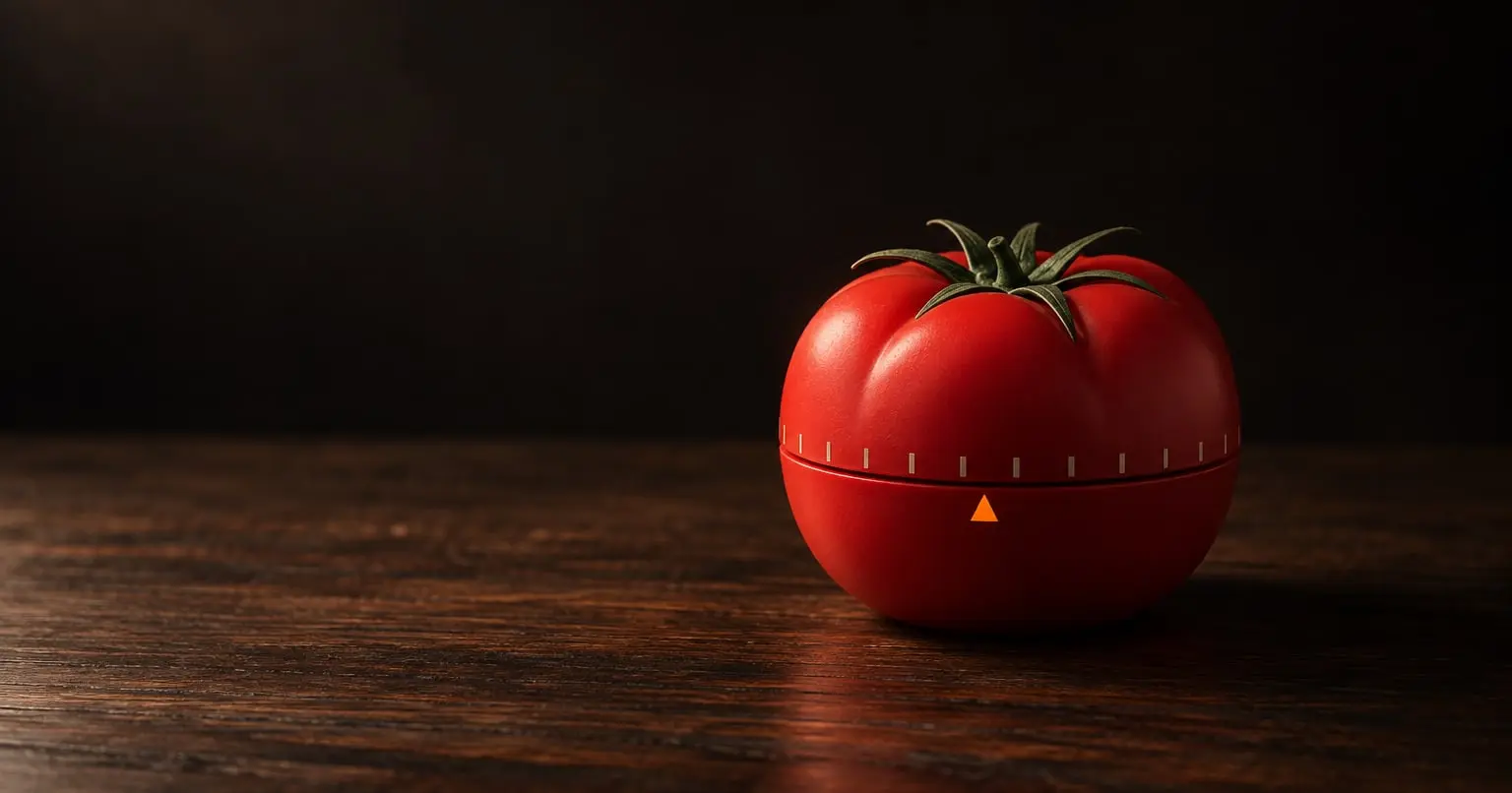
Five to ten minutes, usually between focused blocks. In the Pomodoro rhythm this is the 5-minute break after each 25-minute round. It is long enough to stand up and leave the desk, and short enough that you come back without losing the thread.
Long breaks
Fifteen to thirty minutes, or more, after two hours or so of focused work. This is the time for food, a walk outside or a proper conversation. A long break you skip tends to come back later as an afternoon where nothing gets done.
If you are not sure how short and long breaks fit around work blocks, our guide to how the Pomodoro technique works lays out the full cycle.
What actually restores your attention?
The common thread is contrast. A good break uses a different part of you than the work did.
Movement. Desk work keeps you still. Standing, walking to another room, climbing a flight of stairs or doing a few stretches gets your blood moving and breaks the posture you have held for the last half hour.
Looking far away. Screen work keeps your eyes focused at arm’s length for long periods. Looking out of a window at something distant gives the focusing muscles a rest. If the view includes trees or sky, even better. The psychologists Rachel and Stephen Kaplan argued in 1989 that natural scenes hold attention gently, without demanding effort, which gives the effortful kind of attention a chance to recover. The idea became known as attention restoration theory.
Slow breathing. Many people find a few rounds of slow breathing, with the out-breath a little longer than the in-breath, a quick way to settle. Breathing on a count, like 4-7-8 or box breathing, gives your mind something light to follow.
Small tasks with an end. Refilling a glass, making tea, watering a plant. They get you up, and they finish on their own.
Why scrolling your phone is not a real break
Scrolling feels like rest because it asks for no effort. But it keeps your eyes at the same short distance as the screen you just left, and it feeds your mind a stream of new things to react to: a headline, a message, a photo you have opinions about. Each one is a small open loop.
Messages are the worst case. Every unread thread is a little task your mind keeps holding. You come back to work with more on your plate than when you left, and part of your attention stays on the reply you have not written yet.
Scrolling also has no natural end. A five-minute check easily becomes twenty. This matters even more for people whose attention is easily pulled away, which we wrote about in using the Pomodoro technique with ADHD.
If you do want your phone on a break, use it for something with an edge: call someone, look up one specific thing, then put it down.
How to rest your eyes: the 20-20-20 rule
Eye doctors often recommend the 20-20-20 rule for screen work: every 20 minutes, look at something about 20 feet, or 6 metres, away for at least 20 seconds. It fits neatly into microbreaks and costs almost nothing.
A few other habits help tired eyes. Most of us blink less while staring at a screen, so a few slow, full blinks are worth doing on purpose. Palming means rubbing your hands warm and resting the palms over closed eyes for half a minute without pressing. Slow eye rolls, or looking to each corner of the room in turn, loosen the fixed stare that settles in after a long block.
Cozydoro has an Eye Rest activity that walks you through these during a short break: the 20-20-20 rule, blinking, eye rolls and palming, so you do not have to remember them yourself.
What to do on a 5-minute break
A menu helps, because deciding what to do with a break is itself a small effort. Pick from this list and rotate.
- Walk somewhere and back. The kitchen, the end of the corridor, the front door.
- Stand at a window. Find the farthest thing you can see and rest your eyes on it.
- Stretch for a minute. Neck, shoulders, wrists and lower back are where desk tension collects.
- Breathe on a count. Breathe in for four, hold briefly, breathe out for longer, and repeat for two minutes.
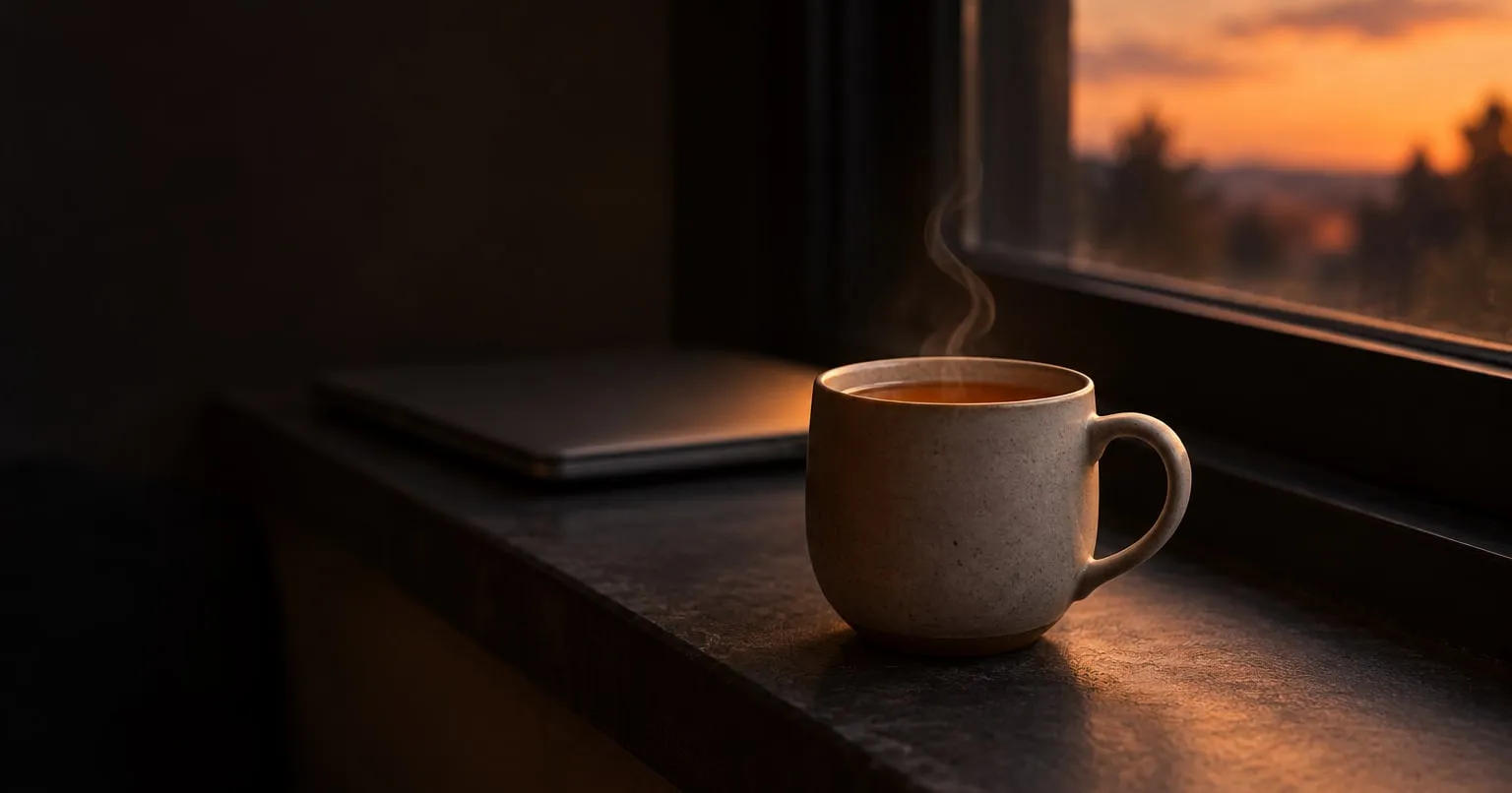
- Make a drink. Tea or water. It takes about five minutes and ends on its own.
- Step outside. Even a minute of daylight and fresh air feels different from the room.
- Tidy one small thing. Clear the desk, wash a cup. Physical, short, finished.
- Talk to someone. Not about work, if you can manage it.
Things to skip: email, news, social feeds, and any “quick” task that is really a new piece of work. Writing a report and then answering work messages on the break is two kinds of work, not work and rest.
How we handle breaks in Cozydoro
In Cozydoro, breaks are timed the same way focus is, and a notification tells you when each phase ends, so rest starts on schedule instead of when you are already drained. When a short break begins, a card under the timer offers a small activity. Breathe Therapy paces your breath with 4-7-8, 4-4-4 or 5-5, and there are also desk stretches, a mini workout, piano and balloons, among others. The break activities are part of the free app.
Whatever you use, the habit is the same: stop on time, do something that is not the work, and come back on time. At your next break, stand up before you reach for anything.
Questions people ask
How often should you take a break when working?
A common pattern is a short break every 25 to 50 minutes of focused work and a longer one every two hours or so. Pauses of under a minute, like looking away from the screen, can happen much more often.
Is scrolling on your phone a real break?
Usually not. A feed keeps your eyes focused up close and hands your mind fresh information to process, so you tend to return to work with less attention than you left with.
What is the 20-20-20 rule?
It is an eye-care guideline for screen work: every 20 minutes, look at something about 20 feet (6 metres) away for at least 20 seconds. The pause lets the eye muscles that hold focus at close range relax.
How long should a short break be?
Five to ten minutes suits most focused blocks, with a longer break of 15 to 30 minutes after three or four blocks. What you do matters more than the exact length: the break should be different from the work.